There is something deeply comforting about clay.
Perhaps it is the texture. Perhaps it is the earthy colour that reminds us of the soil after rain. Or perhaps it is the fact that something as ordinary as earth can pass through human hands and emerge as a sculpture, a vessel, a deity, or a piece of art.
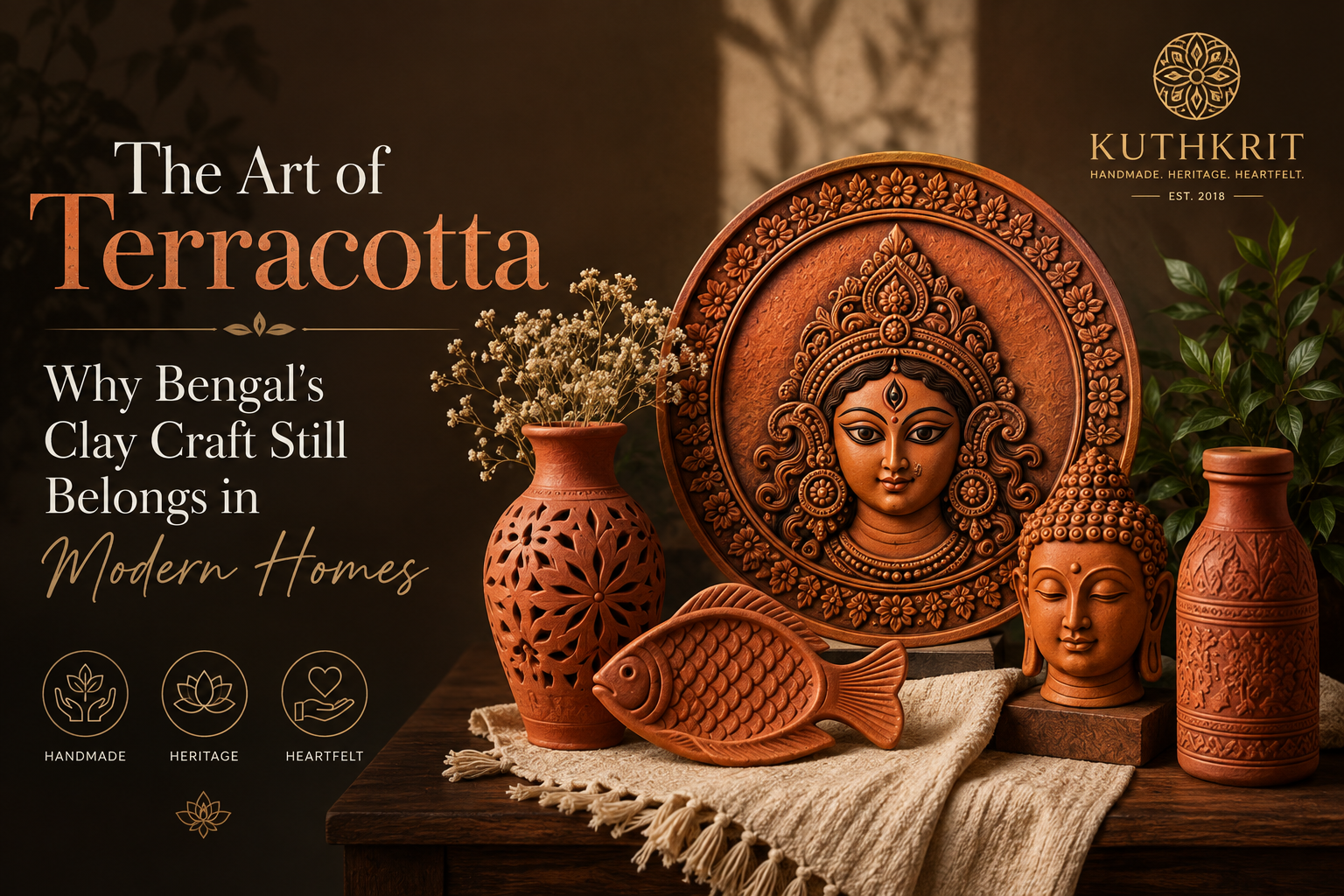
Across India, terracotta has been part of everyday life, ritual and decoration for centuries. The craft is made from natural clay that is shaped and then fired, creating the characteristic earthy surface associated with terracotta. The Government of India’s Development Commissioner (Handicrafts) describes terracotta as a traditional craft used for everything from figures and idols to lamps, utensils and decorative objects.
But in Bengal, terracotta has become much more than a craft material.
It has become part of the region's visual language.
From the famous terracotta temples of Bishnupur to the artisan villages of Bankura, clay has been used to tell stories of mythology, nature, devotion and everyday life. Bishnupur's historic temples, many dating to the 17th and 18th centuries, are particularly renowned for their architectural and terracotta details.
And today, that same connection between earth, art and culture is finding a place in contemporary homes.